Why the EU’s Protectionism Against Chinese EVs Will Backfire

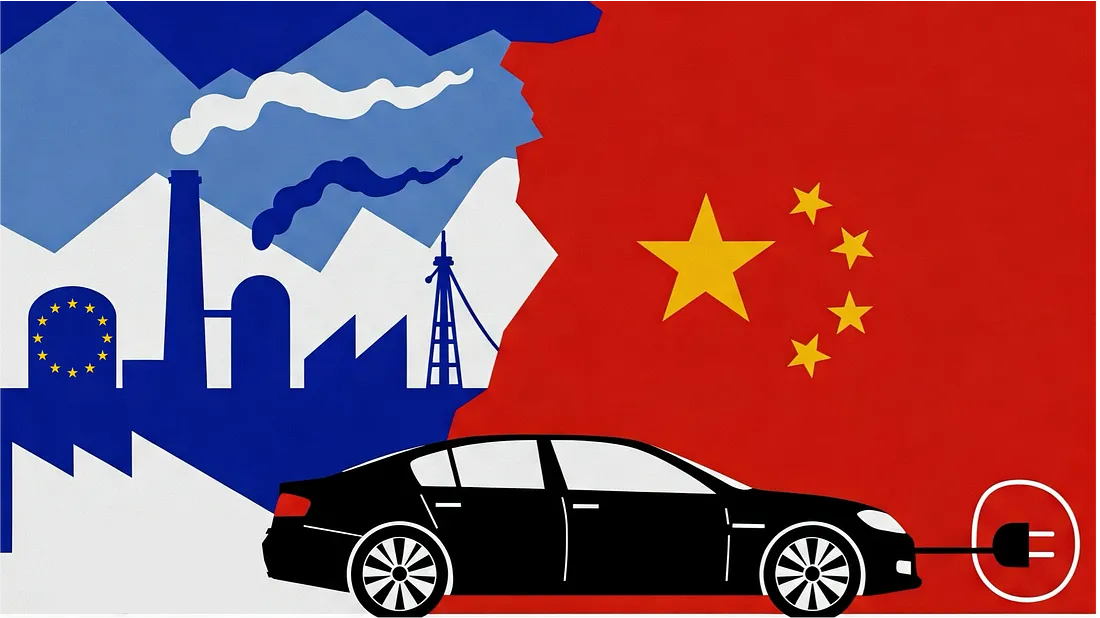
If there was any doubt before, October and November 2024 proved that protectionism is fully back on the menu. In October, the European Union (EU) agreed to raise tariffs on battery electric vehicles (BEVs) from Chinese manufacturers. The tariffs, which were originally capped at 10%, may be increased up to 45% of the original price of the car. In November, the United States elected Donald Trump — the man at the forefront of the 21st-century protectionist surge — to return to the White House. The EU’s move raises many questions for the economically liberal bloc of 27 countries, and has already sparked retaliation through a Chinese lawsuit against the EU with the World Trade Organisation (WTO). These tariffs represent a short-sighted and ultimately counterproductive effort by the Union, which will hamper international cooperation and undermine the Union’s climate goals. Here is why.
The Return of Protectionism: A Primer
The Union used to be known for its liberal trade policies. In early October, the Commission proudly shared updates on the trillions of euros its 42 agreement-trade network boasts. However, in conjunction with broader worldwide trends, European states appear to have started implementing limits to free trade in the interest of domestic industries. This trend was, of course, initiated by Donald Trump’s 2016–2020 presidency in the United States. The trade war he initiated against the Chinese economy in 2018 signified a return of tariffs, which has affected the EU in two major ways.
First, the EU itself was harmed by tariffs placed against it by the Trump administration. US tariffs against European steel (25%) and aluminium (10%) significantly soured relations between Brussels and Washington. Facing these newfound barriers to trade, the EU filed a complaint to the WTO, and retaliated by compiling a new list of American export goods to be subject to duties.
Although America’s presidency changed parties in 2020, President Joe Biden has maintained his predecessor’s stance on China. In fact, the Biden administration expanded on Mr Trump’s tariffs, while limiting trade war rhetoric and fostering cautious cooperation with China. It maintained Trump-era tariffs and elaborated these as recently as early 2024, under the guise of protecting domestic consumers and industries.
After Donald Trump’s return to the White House in January, it has become clear how Trump’s election talk has proved indicative of his policies in office. While campaigning, Mr Trump touted a blanket foreign goods-tariff of 10–20%, with Chinese goods being targeted by as much as 60%. This would radically reheat the trade war rhetoric that Mr Biden toned down, and presents a categorical step away from free trade. Tariffs of 25% are currently in place against Canada and Mexico, with the EU likely to be targeted next.
Second, European states, while keeping similar tariff levels against Chinese goods and services as before, did take note of the US’s generally more critical sentiment towards China. An example of this is the Union’s foreign direct investment (FDI) screening framework, which was adopted in 2019 amid security concerns and complaints over Chinese business practices in the EU. Furthermore, the Comprehensive Agreement on Investment between the EU and China was frozen by the European Parliament in 2021 over human rights concerns.
Thus, the United States’ inward turn towards trade competition shows no signs of slowing down, and has informed EU trade policies towards both the US and China.
What Tariffs, and Why?
European leaders could do with zooming out and reconsidering this policy shift. The Commission’s recent decision to impose increasing tariffs shows that the shift towards economic regionalisation is here to stay. Specifically, the Union imposed countervailing duties, increasing the prices of Chinese BEV-companies BYD by 17%, Geely (which includes Volvo and Polestar) by 18.8%, and SAIC by 35.3%.
The EU’s concerns about these Chinese companies are rooted in the unfair business practices they allegedly employ. However, other factors might be more significant in the targeted companies’ ability to undercut European prices. The Chinese EV market is characterised by intense competition, driven by over one hundred rivalling domestic producers. This fierce contest, combined with China’s large economies of scale, low labour costs, and early mover advantages, enables lower prices for many Chinese-produced EVs. Thus, the Union’s reasoning does not appear wholly legitimate.
Part of the underlying rationale surrounding these tariffs is not necessarily related to cars, however. The West has generally become more receptive to the conception that production of ‘critical infrastructure’ should stay within liberal democratic bounds, so as to limit any dependence on potential adversaries. Fresh in the memories here lies European states’ over-reliance on Russian gas, which saw the bloc scrambling for alternatives when Russia invaded Ukraine. The old liberal adage that trade and interconnectedness could prevent hostile acts by authoritarian states — let alone lead to political change — proved catastrophically false in 2022. Wandel durch Handel is no longer in vogue.
Now that other states have started besting the West, it is turning back the clock on economic liberalism.
Furthermore, this framing is not new with regards to China. Since 2018, mistrust surrounding Chinese technologies surged in the context of 5G network connectivity. 21 EU states have limited Huawei or ZTE’s capacities to build such networks after the EU’s 2020 5G Cybersecurity Toolbox measures. The West has decided to take a “better safe than sorry”-approach to Chinese technologies, even though no proof has been offered of any malfeasance or ‘back doors’ in the Chinese companies’ networks which would allow data to pass through to the Chinese government. In the context of the automotive industry’s electrification, BEVs rely on technology much more than their fossil variants. The European Commission is said to be in the early stages of creating a similar ‘toolbox’ to its 5G counterpart to limit the threat that Chinese cars would pose to Europeans, and allow for easier decoupling if deterrence against China becomes politically necessary.
Finally, the tariffs should not be seen as a move to protect the share of Western car brands. European manufacturers that have outsourced production to China will also fall victim to a 20.7% import tariff. Therefore, the move mainly appears to boost European industry by encouraging manufacturers to shift production back towards the Union. Thus, the core rationale behind these tariffs is the protection of volatile European industry, not its car brands.
Why Not?
Again, zooming out reveals further reasons why these tariffs are counterproductive. First, the capitalist economic system has always relied on competition driving improvements and making markets more efficient. However, putting up protectionist barriers against more efficiently produced foreign goods creates market distortions. While these tariffs could provide some temporary protection from Chinese competition, they do not address the underlying lack of competitiveness which has hampered the European car industry in recent years. Taking this to heart would mean that rather than being protected by limiting cheaper production from abroad, the European car industry needs to reinvent itself and become a more attractive option for consumers.
At a higher level, this change underlines a broad grievance with the West: the neoliberal system it has exported across the globe in past decades has only lasted as long as it benefitted Europe and the US. Now that other states have started besting the West, it is turning back the clock on economic liberalism. Pursuing self-interest can be considered a typical element of the anarchic state system. Still, the previously normative aspect of the liberal-democratic push for open markets has often led to extreme debt and dependency in Global South states, and has primarily served Western interests.
Second, the EU’s decision to increase tariffs against Chinese vehicles will have further ramifications for trade between China and EU Member States beyond this decision. Germany had voted against and expressed disappointment with the tariffs since they are likely to invite retaliation from the Chinese government. Since China remains German carmakers’ second-biggest market and the industry composes more than 5% of German GDP, any Chinese retaliation against European car brands would especially affect Germany. Reprisals might also occur in other sectors, as can be seen with French brandy exports such as Hennessy being subjected to increased tariffs immediately after the EU’s BEV-vote.
Lastly, electric cars remain the direct future of the automotive industry, and will offer a significant reduction in day-to-day emissions to counter the climate crisis. The EU aims to reach at least 30 million active EVs by 2030 — up from 4.5 million at the end of 2023. Since price is the largest determining factor in EV adoption rates, making electric cars more affordable is the most logical way to achieve this massive projected increase in just over half a decade. Therefore, imposing tariffs against cheaper Chinese electric cars directly inhibits the EU’s climate goals by keeping prices artificially high and reducing the incentive for manufacturers to offer low-cost options. In doing so, it also limits individual consumers’ ability to contribute to the fight against climate change.
Moving Forward
Thus, the EU’s decision to impose tariffs on electric vehicles produced in China will significantly harm the pickup of electric vehicles in the EU, and will artificially shield European manufacturing from the desperate need to become more efficient. While Europe’s protectionist turn is by no means at the projected level of the United States under Trump’s second term, neglecting the causes behind the need to safeguard manufacturing will only postpone and aggravate the harms this will create. Recognising its flaws by boosting Europe’s productive capacity and efficiency is the EU’s only way out, both for its climate goals and for its industry’s future.