
What ‘Tokenmaxxing’ Amazon Employees and Chinese Local Leaders Have in Common

Recently, Amazon employees were reported to be engaged in internal competitions of ‘tokenmaxxing’: maximising their usage of artificial intelligence (AI) tools, in order to satisfy their leadership. Largely because of shifting investor expectations and the efficiency gains promised by AI companies, many companies are increasingly pushing for their employees to start using AI in their work – even when this usage does not meaningfully contribute to their goals. Companies are treating AI adoption as a defining factor of their futures. However, while AI tools can at times lead to productivity improvements, the evidence for a structural increase in efficiency is weak. Advice on how to approach this problem can come from a surprising place: the inner workings of politics in China.
Climbing the Ranks
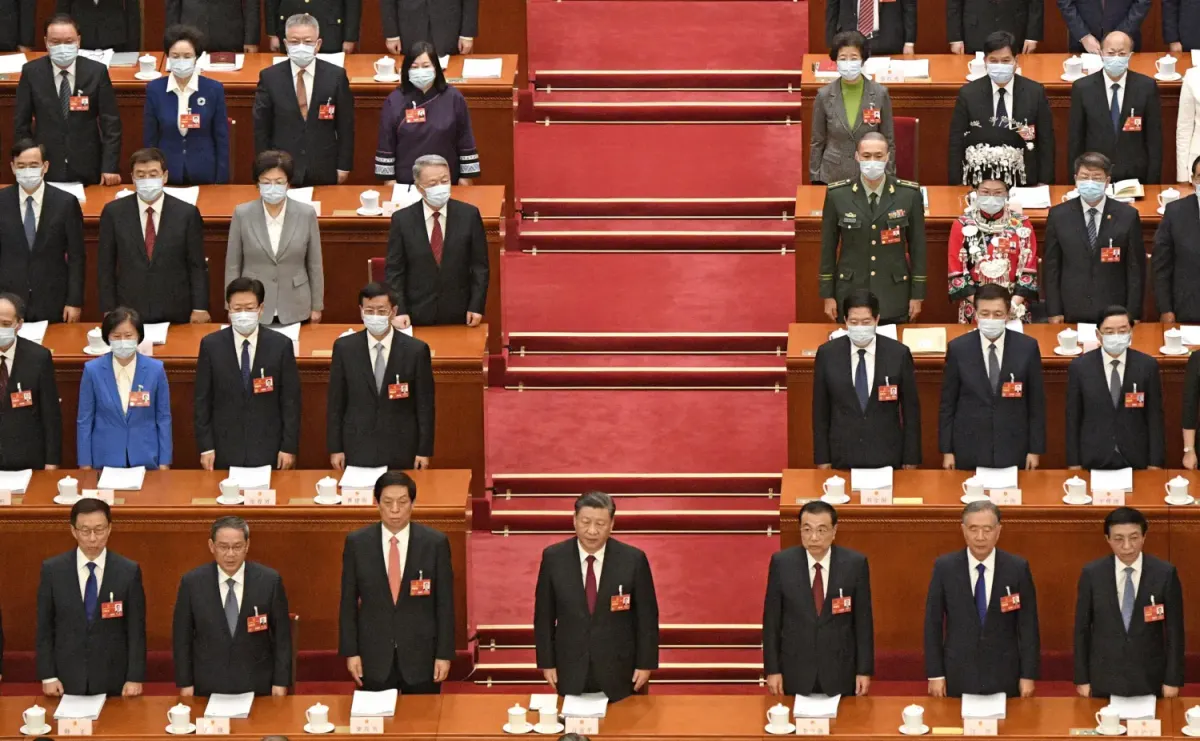
In the West, domestic politics in China is usually not considered beyond the understanding that as a one-party state, the centralised leadership under Xi Jinping decides the direction of the country. More interesting, and much less discussed, however, are the structures that enable the leadership’s decisions to be achieved: lower-level political leaders in charge of implementation.
National-level priorities are usually discussed and published in official speeches and Party gatherings, but can also be sharpened or adjusted based on state-owned media reporting. As a local leader wanting to climb the Party ranks, your ability to turn your region into a successful example of Beijing’s policy decisions and targets is crucial; this is often seen as proof of your competence. Therefore, national targets (accompanied by government subsidies) are picked up by many ambitious local leaders at once, aiming to improve conditions for both themselves and their constituents. Historically, successful economic growth as measured through GDP has been the paramount element in promoting local leaders.
Consequently, because of national policy decisions, different areas within the country feverishly build towards the same end goal. Similar to European Union directives, in which a specific goal must be achieved but national methods and legislation can differ, local leadership in China has agency in how they adhere to Beijing’s wishes. Many choose similar approaches, however. A common template for economic policy directives includes local leaders providing financial incentives to private businesses. This approach achieves the desired result in multiple ways: it creates jobs, increasing taxation; boosts regional production and consumption; and expresses devotion to the central government’s priorities.
When done well, this approach achieves the required result: solid increases in GDP. For instance, China’s national industrial capacity was promoted centrally but executed locally and has been the backbone of its economic growth in past decades. Moreover, the government’s early push into electric vehicles (EVs) has seen it become a global leader in that sector due to ruthless domestic competition between over a hundred companies, driven by local implementation.
However, the combination of stringent adherence to government requirements and a too-narrow focus on the end goal has brought significant downsides, too. For one, industrial overcapacity is now a defining feature of the Chinese economy, causing trade disputes with other countries and masking a significant mismatch between domestic supply and demand. Second, in a course correction, Beijing has recently pushed EV companies to increase prices in order to make the sector more sustainable in the long run; EVs are frequently sold at a loss to gain market share.
Lessons for Leaders
Thus, domestic competition between regions in China to adhere to the central government’s policies is a double-edged sword. While attaining the desired result on the surface, an overzealous focus on economic growth can lead to counterproductive actions and structural instability. The Chinese government’s recent campaign to reform a “correct view of performance” purportedly de-emphasises GDP growth as its main criterion for the promotion of local Party officers. Instead, performance reviews now focus on broader social and political factors.
What, then, can Amazon, and other companies focused on AI ‘tokenmaxxing’, learn from this? Centrally defined goals can produce impressive results at the implementation level. Still, for implementation to promote actual use rather than arbitrary number-chasing, taking a broader perspective is required. In short, Goodhart’s law still applies today: When a measure becomes a target, it ceases to be a good measure.