Why Western Tech Sanctions on China Are Short-Sighted

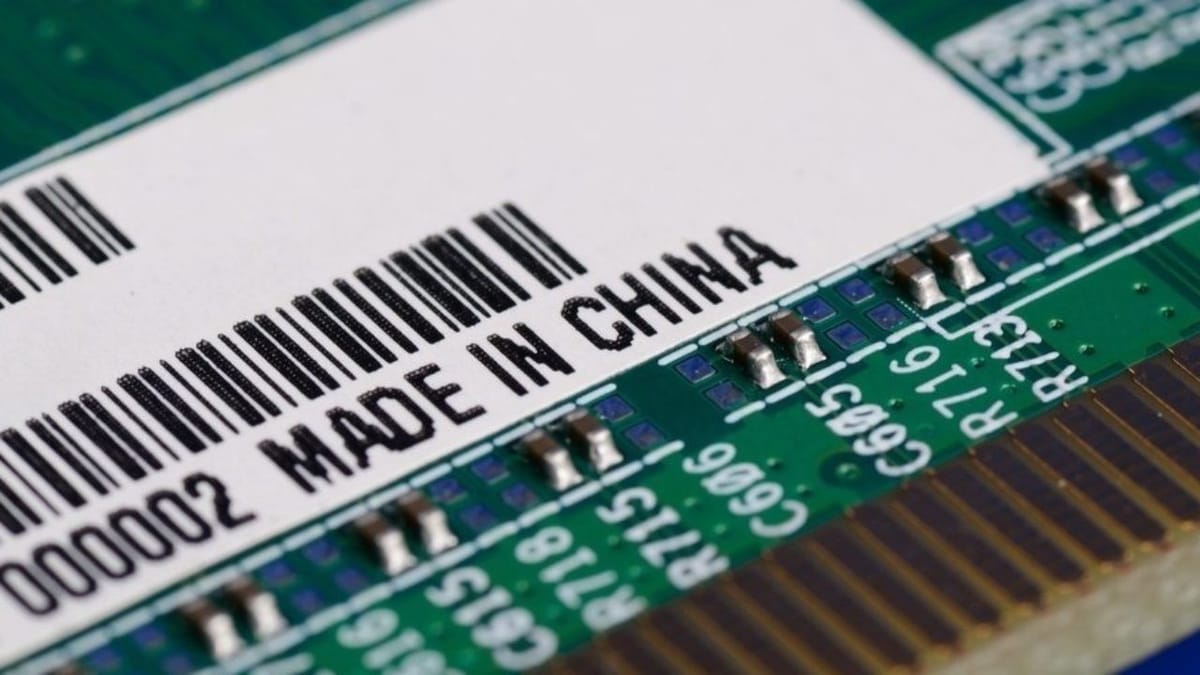
Over the past decade, Western governments have increasingly come to see China as a threat. While Chinese industry started out as a boon for Western companies to outsource manufacturing jobs, reducing costs and improving efficiency, the benefits have since begun to swing the other way. In 2015, the Chinese government launched its “Made in China 2025” initiative which aimed to move from low-value manufacturing to high-value added technological development. Since then, Western governments, and particularly the United States, have implemented restrictions preventing Western companies from exporting to or doing business with Chinese businesses. However, this approach is short-sighted and ultimately serves the Chinese government’s long-term goals.
The primary rationale for recent American efforts to curb export to China has come under its “national security” moniker. For instance, banning American companies from doing business with Huawei was justified under unproven concerns about backdoors in Huawei telecommunications which would allow the company to capture valuable data and spy for the Chinese government. Since then, the US government’s reasoning has widened alongside its regulatory scope. Taiwanese chip giant TSMC was blocked from providing Chinese companies with chips that could be used for artificial intelligence purposes. Moreover, the Dutch government complied with an American request to further restrict ASML, a crucial manufacturing supplier, from selling advanced machines to Chinese businesses. This restriction is set to be expanded after the bipartisan MATCH Act was introduced in the US Senate in early April 2026. For such restrictions on foreign companies, a direct “national security” threat is less immediately obvious: rather, the goal of hindering and delaying Chinese technological advancements in order to safeguard American companies’ dominance in chipmaking becomes rather clear.
However, this approach is fundamentally misguided. Western blockades of technologically advanced products have ultimately spurred domestic innovation. For instance, after Huawei’s blanket ban from the first Trump administration, its phone division has recovered and is now running an alternative operating system, HarmonyOS Next, to the open-source Android system it used before. Significantly, this development breaks the American near-monopoly on large-scale mobile operating systems with Google’s Android and Apple’s iOS. On the chip front, American-led manufacturing barriers have provided an extra impulse for mastering domestic production. The initial shock was used by Beijing to emphasise “whole-nation” chipmaking expertise. The Chinese government has since announced multiple state-backed funds meant to encourage domestic competition and innovation, an approach which is already bearing fruit. Huawei’s devices now use chipsets that are domestically produced in collaboration with China’s SMIC rather than relying on Taiwan’s TSMC. According to legislative rumours, over 50% of a microchip’s production process in China is now required to be domestically sourced. Therefore, producers are more likely to opt for local technology even in areas of the production process that are unaffected by import bans. On the whole, while Chinese chip offerings still appear quite far from today’s cutting edge, home-grown chips already power many use-cases in products around the world.
Moreover, this approach is not necessarily better than allowing Chinese companies access to the latest Western chips. While these restrictions do indeed limit the industrial-scale learning that full access to American-produced silicon might produce, illicit transfers do still occur. Various people have been caught smuggling restricted hardware through Singapore with Chinese firms as their ultimate destinations. Thus, while the bans surely limit Chinese exposure to advanced Western technology, full isolation is not a realistic expectation.
Furthermore, the Chinese government’s push for domestic innovation and ample space on its electrical grid allows domestic industry the physical and financial room to catch up to Western capabilities and produce more deeply rooted development know-how. Besides, as the sudden rise of AI company Deepseek showed in 2025, the cut-throat nature of business competition in China means companies have always been forced to achieve more with fewer resources. Thus, while it might seem like it makes sense to limit Chinese exposure to advanced Western chips, the benefits of this rationale are limited.
All of this, ultimately, is playing into China’s long-term plans. In vital areas such as semiconductors, the Chinese government intends to build out full self-sufficiency in order to prevent coercion from other countries. In that context, these export bans may become a blessing in disguise. Its Made in China 2025 programme aimed for 2049, the country’s centenary, as the deadline to become a “manufacturing powerhouse that leads the development of the global manufacturing industry”. Its chip industry might reach this status much earlier than the government would have hoped in 2015, in no small part due to the urgency created by Western sanctions.