New Talks, Same Issues: How the EU Is Rethinking Its Approach to Trade and Investment With China

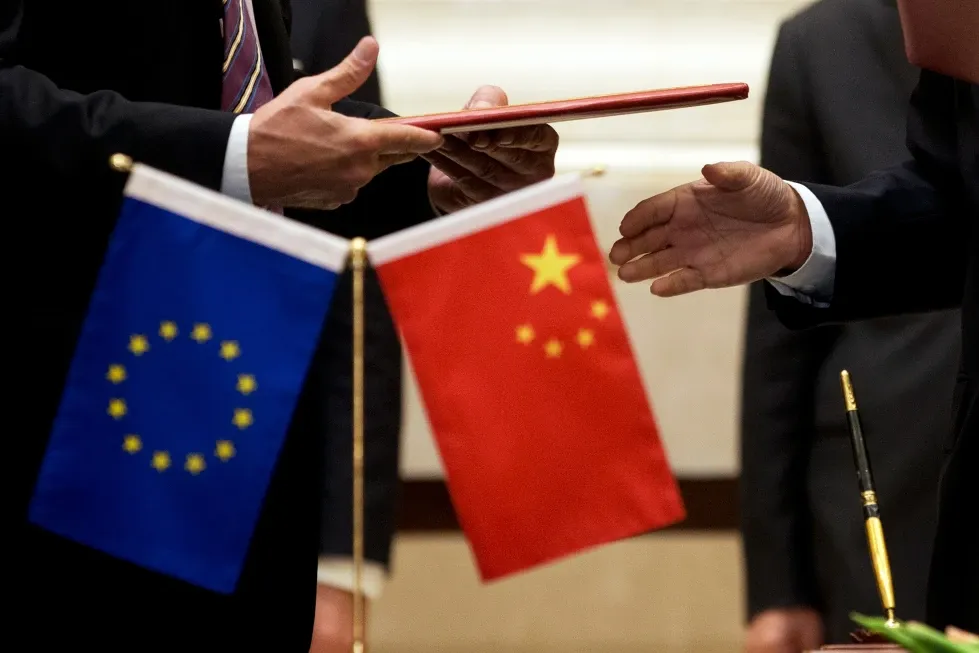
In 2013, China and the European Union embarked on marathon negotiations for an investment agreement between the two major trading blocs. The Union sought “closer trade and investment ties between our economies”, as the deal attempted to improve accessibility for European businesses, streamline import frameworks for Chinese corporations, and promote a more balanced exchange. After six years of negotiations, both sides reached agreement. However, as the Comprehensive Agreement on Investment (CAI) remains unratified twelve years after negotiations began, the EU appears to have lost its appetite. With renewed talks going on, similar issues are still up for debate. But what has changed?
Start with the main characters. In the early 2010s, Barack Obama’s era of trade optimism still inspired the EU’s policy prescriptions. However, Donald Trump’s first presidency reshaped the status quo on trade. In the EU, Jean-Claude Juncker made way for Ursula von der Leyen, whose increasingly hawkish stance on China has followed America’s lead. President Trump’s return to office in 2025 has seen protectionist approaches spike globally, even more than in his first term.
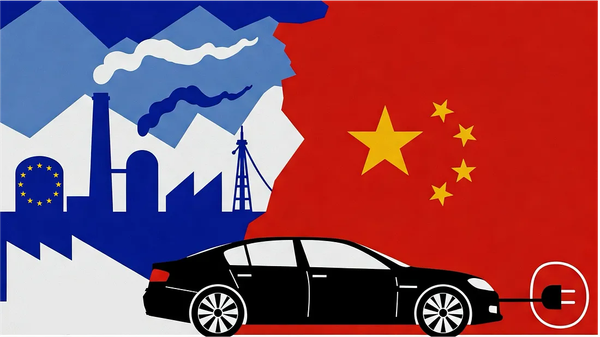
Meanwhile, the benefits of trade have shifted. For instance, the Chinese economy increasingly focuses on production for its own market, rather than the rest of the world. Its practice of exporting domestic overproduction to the West has initiated a marked shift in trade relationships (for more on the cause of this overproduction, see my earlier article). Alongside the resulting relocation of profits from the EU to China, the European market has become at risk of flooding with very competitively priced goods. At the same time, despite significant domestic woes, China’s international economic capability has strengthened.
Moreover, the EU’s change of heart has come amid a wider fear of China in politics. For instance, policymakers have become warier of Chinese technological ability. Whereas its industrial capacity used to be China’s main selling point, it is now a reason to fear the rising power. European leaders are limiting Chinese businesses’ operations in critical sectors, such as telecommunications, and have called for ‘de-risking’ the Union’s engagement with China. Rather than decoupling, which implies cutting most of the continent’s trade with China (and would lead to disastrous consequences), ‘de-risking’ instead attempts to restructure supply chains and implement policies to reduce dependence on Chinese industry, without a blanket ban on trade.
Justifications behind this policy change have evolved. Before, human rights concerns took centre stage in explaining the EU’s tentative approach to trade with China. Revelations of human rights abuses in Xinjiang, the suppression of Hong Kong protests, and opaqueness surrounding the origins of Covid-19 led to an attitude shift in recent years, making investment cooperation with China less politically appropriate. In fact, Chinese sanctions on European Parliament members who were investigating Xinjiang human rights abuses provided the initial roadblock for the mutual investment deal.
However, over the past four years, EU foreign policy has adapted to global trends. First, it has drawn lessons from Russia’s invasion of Ukraine, in which dependency on Russian oil and gas posed a domestic challenge to the Union. More recently, American threats to European sovereignty and its NATO defence umbrella have shown that the world of the 2010s no longer exists. Thus, the Commission now pursues a more “realistic and interest-driven” foreign policy. Concerns over human rights are therefore no longer needed as a justification for blocking trade: a threat to its (economic) interests is enough.
What Now?
Against this backdrop, the Union renewed three-month talks with China in June. In these discussions, trade imbalances and market access inequality continue to be core sticking points. The CAI's previously approved terms, though relevant, have been set aside. More than a decade since its inception, the agreement thus appears unlikely to be revived.
Nevertheless, both sides should find common ground in these new talks. With an unreliable partner across the Atlantic, as shown by yet another round of tariffs announced by the American government, the EU and China are both best served by a stable trade and investment relationship. Key provisions from the abandoned agreement are still sound policy. For instance, better market access for European businesses in China could help address the trade imbalance between the two blocs, and a ban on forced technology transfer might increasingly benefit cutting-edge Chinese companies over European businesses, as I have argued before.
Thus, the optimistic environment of the early 2010s might no longer exist, but the EU and China can still benefit from this era’s policy. The Comprehensive Agreement on Investment remains a good place to look for inspiration.